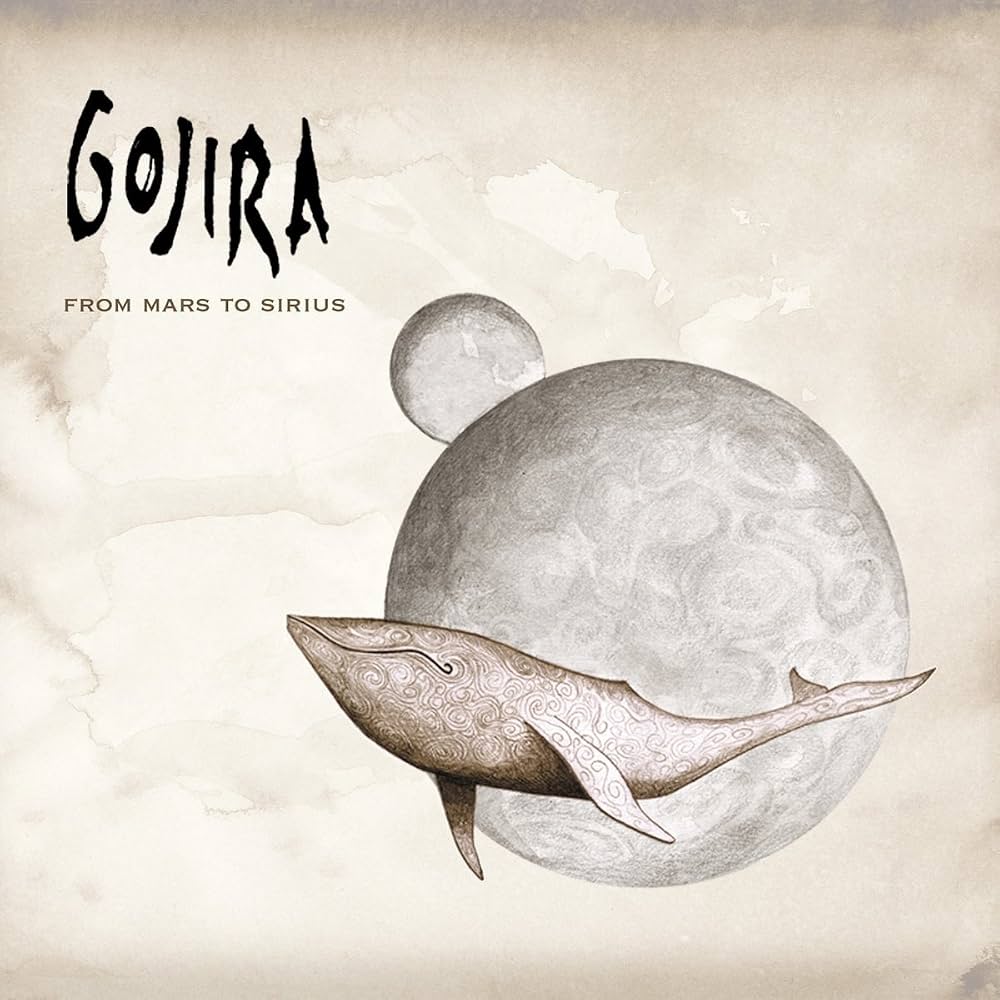
The French band's third album, the record that established Gojira as a reference point for European technical death metal, built around an explicit ecological concept: the destruction of the oceans and the global environmental crisis read through an almost cosmic lens, with Earth observed from a planetary perspective that moves from Mars to Sirius in the title itself. Joe Duplantier sings with a deep growl over polyrhythmic riffs built around tribal percussion and syncopated grooves, a technical framework requiring precise coordination between guitar and drums (played by his brother Mario Duplantier) closer to the mathematical precision of math metal than to the direct brutality of classic death metal. Flying Whales opens the record with a riff that imitates whale song through the guitar's tuning, while the lyric describes humpback whales levitating toward the sky in an almost mystical vision of escape from oceanic destruction. Ocean Planet explicitly treats Earth as a body of water to be protected, while Where Dragons Dwell builds an extended instrumental crescendo before resolving into one of the record's most direct riffs. The entire album alternates sections of almost hypnotic rhythmic violence with more open, atmospheric passages, often built on a single sustained chord. The connection to Rosi Braidotti here is precise: her "affirmative" posthumanism treats the body and the environment as shared, non-anthropocentric political territory, and From Mars to Sirius applies the same principle sonically — a record that doesn't sing about ecological destruction from a human point of view but attempts to imagine a non-human perspective (the whales, the planet itself observed from space) from which that destruction becomes legible. The connection to J.G. Ballard instead concerns the aesthetics of environmental disaster as active psychological territory: the dying ocean as a sonic texture, translated into a rhythmic framework that literally imitates the sounds of the marine life it describes. From Mars to Sirius remains the album that carried Gojira beyond the strictly French death metal circuit toward a wider international audience, paving the way for the even more explicitly environmentalist work the band would pursue on subsequent records, culminating in their performance at the 2024 Paris Olympics.
L'IA sta riascoltando l'album per te...