| # | Track Title | Duration |
|---|---|---|
| 1 | Farmer in the City | 7:22 |
| 2 | The Cockfighter | 10:22 |
| 3 | Bouncer See Bouncer | 5:35 |
| 4 | Manhattan | 6:38 |
| 5 | Face on Breast | 7:16 |
| 6 | Bolivia '95 | 8:04 |
| 7 | Patriot (A Single) | 8:44 |
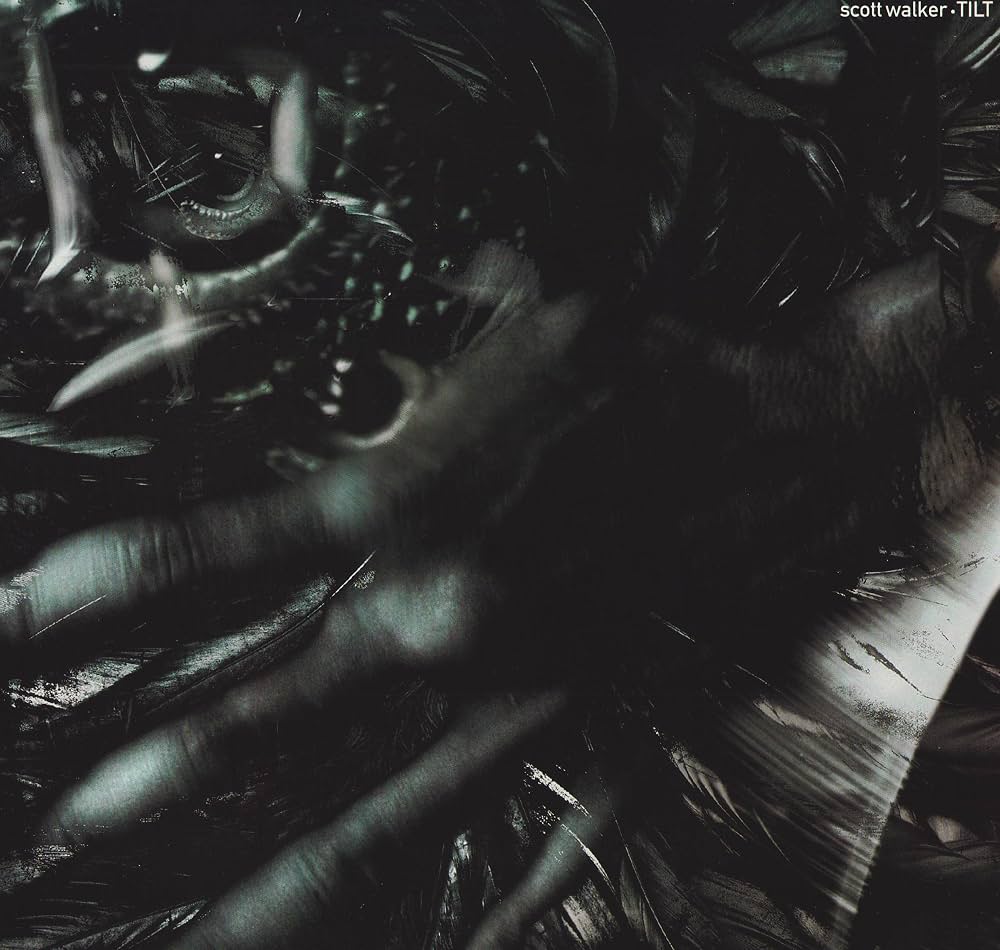
Eleven years after his previous solo album, Scott Walker—former 1960s pop idol of the Walker Brothers, who had spent decades in progressive isolation from the music scene—releases an album that definitively shuts down any possibility of a nostalgic reading of his career. Recorded with an orchestra treated more as a sonic mass than melodic accompaniment, the album works through blocks of sudden tension and release, with Walker's voice—still the warm baritone of his 1960s hits—bent over lyrics that proceed by free association rather than linear narrative. Farmer in the City, dedicated to the director Pier Paolo Pasolini, opens the record with strings moving almost atonally beneath a vocal line that remains strangely melodic, a contrast that runs through the entire album. The Cockfighter alternates extended silences with bursts of industrial percussion, featuring sampled mechanical noise that emerges and disappears without warning. Bolivia '95 builds an almost unbearable orchestral climax before dissolving into a stark finale, while Manhattan works with fragmented urban imagery that never settles into a coherent scene. The connection to J.G. Ballard lies in the compositional method even before the themes: Walker treats the voice and orchestra as materials to be dismantled and reassembled into unnatural configurations, precisely as Ballard treats the urban landscape—no longer a backdrop, but an active agent capable of producing psychological effects independently of the intentions of those who inhabit it. The link to Reza Negarestani is more oblique yet equally precise: Tilt functions as a closed system that self-generates according to an internal logic incomprehensible from the outside—an almost ontological apparatus that does not ask to be interpreted, only traversed, in the same way Negarestani treats his own conceptual systems as entities capable of self-realization independent of their designer. Tilt marks Walker's definitive shift into the territory he would explore even more radically over the following three decades (The Drift, Bish Bosch), and remains the album that forced critics to reconsider the entire trajectory of an artist who started as a pop idol and arrived, without ever disowning that voice, at one of the most extreme frontiers of contemporary orchestral music.
L'IA sta riascoltando l'album per te...